On a day that’s expected to cross into the triple digit territory, getting out in nature might be a challenge. Neither the Ranch Hands nor me do well in the heat which has been relentless for days on end recently so seeing nature at her finest has been fleeting. A few sights have been inspiring but the harsh bright light took some of the luster off otherwise lovely summer perennials. Still, on a neighborhood errand-running jaunt where I took a different route from normal, something other than crispy-crunchy plants were discovered yesterday.
At any rate, it’s Friday, we somehow managed to survive the miserable heatwave burning through much of the country and we’re joining our ‘furiends’ Rosy, Arty and Jakey from LLB in Our Backyard. When you click on the link, you’ll be able to see what the Gang and others around Blogville have shared this week. So let’s get started, ‘kay?
So what’s currently blooming around our neighborhood? Well, glad you asked. Gladiolas are out for one. Although I’ve never planted any (I have enough trouble keeping tulips from flopping over in early spring), they sure are pretty. Check out this flashy one!

Sorry for the harsh lighting; I came across these beauties mid-morning and there wasn’t a cloud in the sky and it was BRIGHT.
Another staple out this time of year are commonly known as daylilies (Hemerocallis). Did you know Hemerocallis comes from two Greek words (hēmera) “day” and (kalos) “beautiful.” That pretty much nails it in my mind.

Native primarily in eastern Asia (including China, Korea, and Japan) they are now popular worldwide because of their showy flowers and their hardiness with over 80,000 registered cultivars. Some are fragrant and others will rebloom later in the season. Daylilies are actually not true lilies, despite having a similar shape in the flowers. According to Wikipedia,
prior to“2009, the scientific classification of daylilies put them into the family Liliaceae. Unlike daylilies (which have a fibrous root system), Liliaceae species grow from bulbs and are harmful to humans and animals if ingested. It is a common misconception that daylilies share the same toxic properties of true lilies.” Hemerocallis are toxic to cats and may be fatal if ingested.
Hemerocallis come in a variety of colors from the classic yellow, orange, and pale pink varieties, to vibrant reds, purples, lavenders, greenish tones, near-black, and near-white. So far there has not been any successful hybridization with primarily blue-colored flowers.
Next door to the daylilies garden, a newly planted garden was emerging as a fairy habitat. It should be interesting to see how the interspersed plants develop around the multiple village structures as we move toward autumn, which for those needing some hope with the weather is 73 days away (you’re welcome). I loved seeing all the various little stone and shell constructed buildings.

Some people are just too clever (and/or have too much time on their hands).
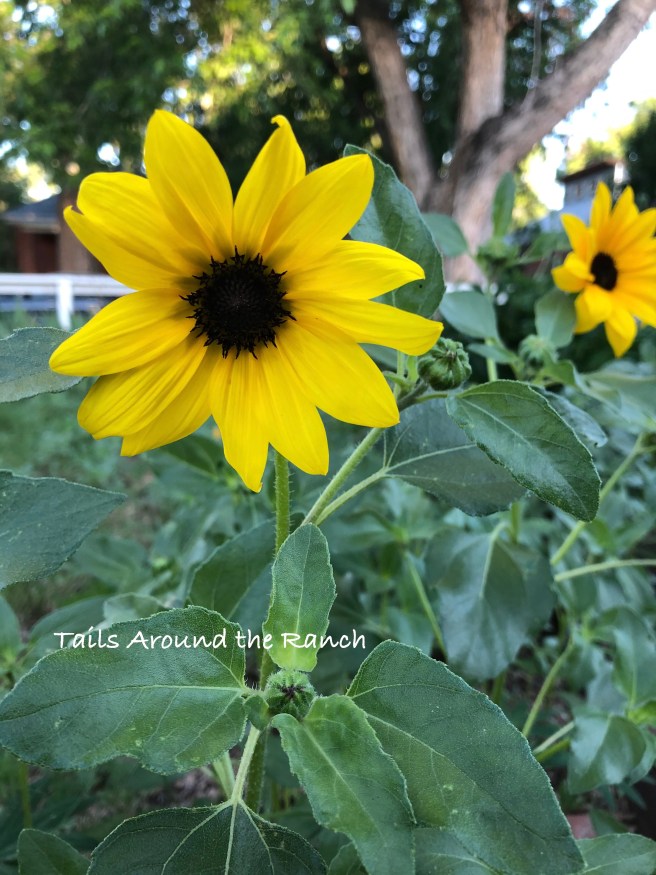
And just because they’re naturalizating all over my garden, how about a bright cheerful sunflower to welcome the weekend? We hope your weekend is extra special. Stay safe, sane and please wear a mask when you go out but most of all keep smiling.

Live, love, bark! 🐾




 Ever notice how dogs can get cabin fever much quicker than humans? Like many dogs, the Knuckleheads nap much of the day, but the naps seemed shorter with more frequent with loads of plaintive glances and relentless nose nudging to pay attention to the clearly depraved canines. One way they can pass the time away when they’re bored, is through annoying behavior.